
Flash Pasteurizers: Made to Order, Built to Last
Cheers to Variety!
Beer
Cider
Juice
7 Flash Pasteurization Features That Make A Big Difference
What Sets SLS apart? Advanced Technology and Custom Builds
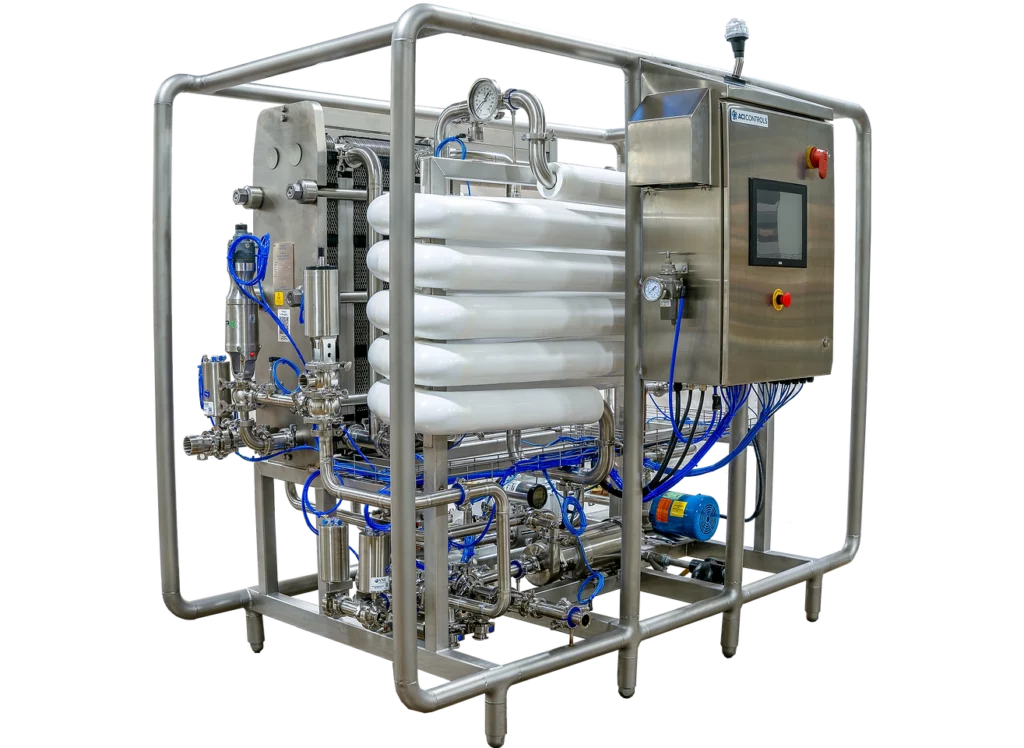
- Advanced Temperature Control
- Automatic Back Pressure and Flow Control
- High Energy Efficiency Rating
- Minimal Dissolved Oxygen Pickup
- 3-Stage Heat Exchanger
- Touchscreen Control Panel
More than just Pasteurization Equipment
- Experience unmatched support
- Unlock better distribution
Learn More About Flash Pasteurization




FAQs
Flash pasteurization is a heat treatment process that rapidly heats a beverage to a target temperature—high enough to eliminate harmful microorganisms—then cools it quickly before packaging. Unlike traditional pasteurization methods, flash pasteurization happens before the product is sealed, using a continuous flow system that processes liquid in seconds rather than minutes. The result is a microbiologically stable beverage that retains its original flavor, aroma, and character.
Flash pasteurization treats the liquid before it’s packaged, moving it continuously through a heat exchanger at high speed. Tunnel pasteurization heats already-sealed cans or bottles by passing them through a warm water spray after filling. Flash pasteurization is generally faster, more energy efficient, and better suited to craft breweries that need precise temperature control without compromising carbonation or flavor.
Flash pasteurization and HTST (High Temperature Short Time) pasteurization are often used interchangeably, since both heat liquid rapidly to a high temperature and cool it quickly in a continuous flow system. The distinction is mainly one of terminology. HTST is a broader industry term used across dairy and food processing, while flash pasteurization is the term more commonly applied in beverage production. In practice, a well-designed flash pasteurizer operates on HTST principles.
Flash pasteurizers are well-suited to a range of beverages beyond beer, including hard cider, apple cider, and fruit juices. The key is equipment designed with the right temperature parameters and sanitary specifications for each product type. Shelf Life Systems builds custom flash pasteurizers specifically configured for beer, cider, and juice production.
The right pasteurizer depends on your production volume, beverage type, and distribution goals. Key features to evaluate include:
- Continuous flow design for consistent throughput
- Automatic PU (Pasteurization Unit) control for precise temperature management
- Minimal dissolved oxygen pickup to protect flavor
- Clean-in-place (CIP) technology for sanitation efficiency
- Energy regeneration rate (90%+ is a benchmark for operating cost efficiency)
- Remote monitoring and support capability
A custom-built system will outperform an off-the-shelf unit for most growing craft breweries.
The most common microbial threats in craft beer are lactic acid bacteria (such as Lactobacillus and Pediococcus), acetic acid bacteria, and wild yeasts like Brettanomyces. These organisms can cause off-flavors, unwanted sourness, haziness, and over-carbonation, including the risk of can bulging or failure. Pasteurization eliminates these microorganisms before packaging, significantly reducing the risk of contamination reaching the consumer.
Spoilage in canned beer is most often caused by residual microorganisms—bacteria or wild yeast—that survive the packaging process and continue to grow over time. Exposure to oxygen during filling, temperature fluctuations in the supply chain, and insufficient heat treatment all accelerate this process. Pasteurization addresses the microbial root cause directly, giving packaged beer a stable, predictable shelf life.
Unpasteurized craft beer typically has a shelf life of 60 to 90 days under refrigeration, and can degrade significantly faster if the cold chain is broken. Pasteurized beer can maintain quality at room temperature for six months or more, depending on the style and packaging. That extended window is often the difference between local taproom sales and viable regional or national distribution.
Yes. Unpasteurized beer relies on continuous cold storage to slow microbial activity and preserve flavor. Any break in the cold chain—during transit, at a distributor warehouse, or on a retail shelf—accelerates spoilage and increases the risk of off-flavors or over-carbonation. Pasteurized beer does not carry the same cold chain dependency, which simplifies logistics and reduces risk across the distribution network.
When done correctly, flash pasteurization has no meaningful impact on the flavor, aroma, or character of craft beer. The process is designed to reach target temperatures briefly and precisely — enough to neutralize microorganisms, but not long enough to cook or alter the beverage. The risk to flavor comes from poorly controlled pasteurization, not from the process itself.
Most regional and national retailers and distributors require a minimum shelf life—often 120 days or more—before they’ll carry a product. Unpasteurized beer rarely meets that threshold, which effectively limits distribution to local markets with short transit times. Pasteurization removes that barrier, giving craft breweries the shelf stability they need to pursue broader distribution contracts with confidence.
Yes. Most beer recalls are triggered by microbial contamination, over-carbonation, or packaging failures linked to unchecked biological activity in the can. Pasteurization eliminates the microorganisms responsible for these issues before the product is sealed, significantly reducing the conditions that lead to recalls. For breweries moving into wider distribution, it’s one of the most reliable quality control tools available.
The upfront cost of a flash pasteurizer is a consideration, but modern systems are designed to offset ongoing expenses. High energy regeneration rates (90%+ is typical for well-engineered units) reduce utility costs, and clean-in-place technology cuts labor and downtime. When weighed against the cost of product losses, recalls, and the revenue upside of broader distribution access, pasteurization typically delivers a strong return on investment over time.
Pasteurization has historically been associated with large commercial breweries, and many craft brewers have avoided it out of concern that it would affect flavor. This perception is changing as flash pasteurization technology has become more accessible and better understood. A growing number of craft breweries now pasteurize specifically because it protects the integrity of their beer during distribution.